Insights > What happens when you hack yourself in front of 600 people?

What happens when you hack yourself in front of 600 people?

On engagement, trust and culture

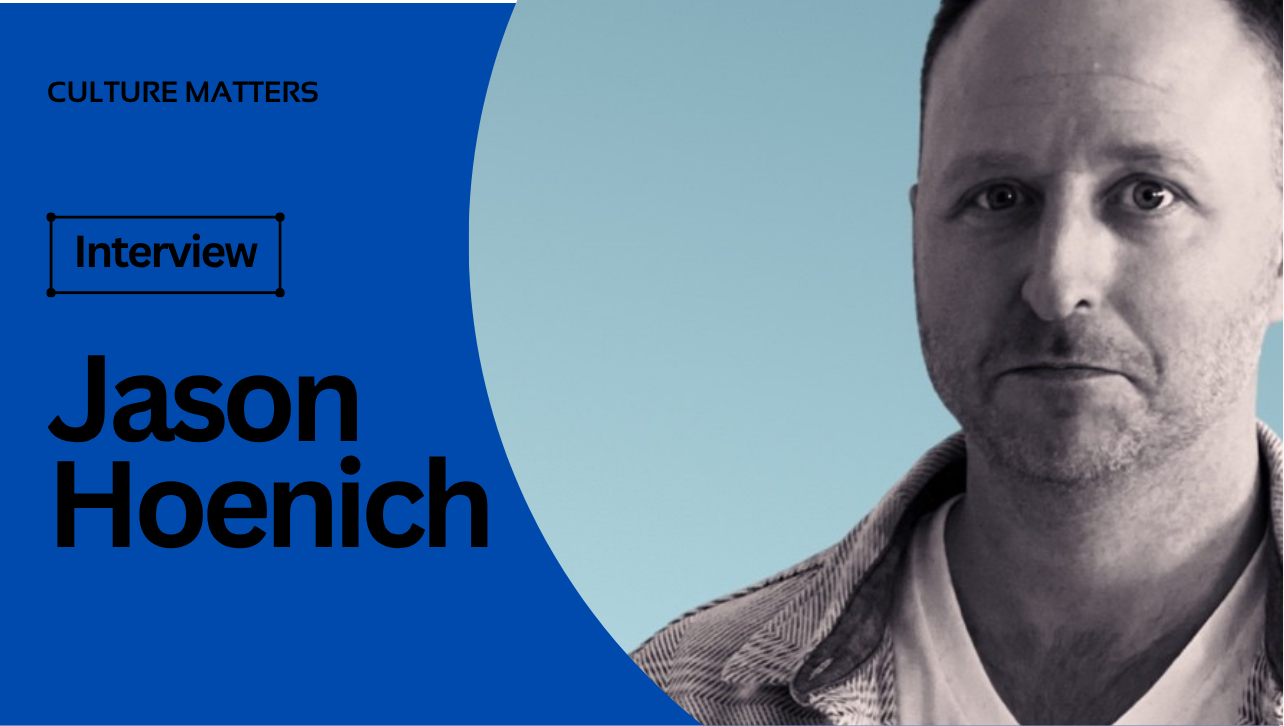
An interview with Jason Hoenich from Human Risk.

Every October, Jason would offer himself to his red team. Get in front of everyone, he told them. Hack me live.

The setup was simple. His laptop on one screen, their screen on the other — all the Mr Robot-style terminal output on their side, his ordinary Outlook inbox on his. Six hundred employees watching. The red team had done their homework: they found his wedding website was still live a few months after the ceremony, located a few vendors, built a convincing PDF invoice. Past due notice. Within thirty seconds of Jason opening it, his face was on their screen via his webcam.

“The murmurs and the gasps in the room,” he says.

He ran the same demonstration at two different companies. Same format, same attack, same result on stage. The audiences reacted completely differently.

At the first company, one where Jason had been fighting for basic traction and struggling to get people to engage with fundamentals, it landed well. Impressive, even. People nodded. Then they went back to their desks.

At the second, the room exploded. People were still talking about it weeks later. Colleagues would stop him in the corridor. “Thank you for doing that. That was so cool.”

“That’s always my temperature test,” he says. “If you give them something really interesting, how do they respond?”

The foundational question

Jason Hoenich has spent 20+ years building corporate security awareness programs, from practitioner roles at Sony and Disney to founding Habitu8 (acquired 2021 by Arctic Wolf). He now runs HumanRisk. (see full bio at the end of this article).

The question he keeps coming back to is the same one, regardless of where he works:

“How strong is that relationship between the security team and employees? Is there respect there? Is there trust there? Is there transparency there?”

Everything else sits on top of that foundation. The tools, the platforms, the phishing simulations, the training completion rates. If the foundation is weak, none of it holds. And the foundation, in his view, starts with the security team itself.

“If it’s a culture of weakest link thinking,” he says, the old ID-10-T joke, the chair-between-keyboard framing then, “I don’t see how you have a good culture when you’ve got that kind of toxic brain operating in the security team.”

What good culture actually looks like

A bad culture, in Jason’s view, has a recognisable shape: punitive, inflexible, and poorly communicated. He’ll “fight anyone for a long time” about programmes that lead with consequences, cut network access immediately, escalate to HR on a second offence, without giving people the context to understand why.

A national utility company, for example, asked Jason to launch exactly that kind of programme. Three-month timeline. Thirty-five thousand employees. Instant network disconnection for anyone who clicked on a simulated phish. Legal hadn’t been consulted. HR didn’t know it was coming.

“Are you ready for ten percent of the company to respond immediately? That’s thirty-five hundred people, for a team of three.”

He walked them back. Over the next year, he ran them through a phased approach: communications first, then simulated consequences with no real penalties, then a gradual escalation. The programme went live thirteen months later, by which point employees had already been seeing warnings for six months.

Some industries require strict programmes, he says. What you can’t do is run them without trust.

“Employees can live within confines and constraints, understanding: okay, I can do this. You don’t want people showing up to work scared every day.”

What culture reveals about itself

One of Jason’s convictions is that you can feel a culture before you can measure it. Walking into Sony Pictures shortly after the 2014 breach, having come from Disney, was like stepping into a different atmosphere entirely. Shared trauma, shared experience. It changes something.

He’s also realistic about where strong culture can come from. An incident can unlock it. Budgets appear. Support materialises. People who never cared suddenly do, because something happened to them.

“No one cares until something happens to them. But when it does, there’s camaraderie to that.”

He compares it to motorcycles. You’re going to drop the bike at some point. The fear of dropping it never goes away, because it’s going to happen and you don’t have control of it. But when you understand that, you can make better decisions. You wear the gear.

Teach people to protect their families

For most of his career, Jason has taken a specific approach to engagement: make it personal.

“I always naturally said: imagine you’re working with your child. You want to lock down your Wi-Fi. You want to protect this asset.”

His reasoning is straightforward. Most employees care about protecting themselves and their families before they care about protecting the company. That’s not disloyalty. It’s human nature. If you can teach people the skills they need for their home lives, they bring those skills to work.

“If you’re telling me my job is to protect the company — well, is it? I mean, you want me to. But my job is to protect myself and my family.”

The insurance underwriting problem

Another reason why the cyber behaviour change needle remains static, Jason thinks, is structural. And it starts somewhere most security culture conversations don’t reach: the cyber insurance industry.

He’s watched underwriters set requirements that businesses have to meet in order to qualify for coverage. Those requirements tend to be minimal and specific: run phishing simulations, complete annual training. Vendors build platforms to satisfy exactly those requirements. The companies that want to do more find it harder to make the case for budget, because the baseline has already been met.

“It begins this whole cyclical, unhealthy cycle.”

Security audits follow the same pattern. Jason has seen audit reports flag human risk as inadequately addressed, then recommend phishing simulations as the fix. The auditor isn’t asking whether it worked.

“Did you do it though? Yes? And then — I don’t want to hear how effective it was. I just want to know that you did something.”

Run it like a small business

When organisations come to Jason saying nothing is working, his first question is always the same: what is your strategy, and who has approved it?

Most programmes, in his experience, get locked into whatever the vendor dashboard shows them. The dashboard shapes the goals. The goals shape the programme. The programme becomes tool-dependent and hard to move.

His advice is to flip it. Build a strategy that is tool-agnostic, something you could lift out of one platform and drop into another without losing the thread. Start with the risk you actually want to reduce. Identify the behaviour tied to that risk. Get stakeholder agreement on both before touching anything else.

“If practitioners in human risk and awareness can learn to run their programme like a small business — they have stakeholders, they have customers, they have goals — I think that’s a skill set that a lot of practitioners don’t have, because they’re coming from different backgrounds. But it’s important.”

The measurement question follows from that. Jason is sceptical of surveys written to validate a programme rather than interrogate it. You can ask questions in a way that makes your results look great, he says, the same way you can design a phishing simulation to produce any click rate you want.

“Just because we can doesn’t mean we should.”

What he’s looking for is something more demanding: a way to track a small number of specific behaviours over time and the cultural conditions that influence them, with enough academic rigour that the data means something. Understand, implement targeted interventions and then measure what people actually do, and whether it changes behaviours over time.

Biography:

Having spent 20+ years building corporate security awareness programs, from practitioner roles at Sony and Disney to founding Habitu8 (acquired 2021 by Arctic Wolf) Jason is now back in the content business. He now runs HumanRisk, where SEAT (Strategy, Engage, Assess, Train) is a framework practitioners run through their preferred LLM to measure program maturity against major regulatory and compliance requirements, and HumanRisk Studios, which produces and licenses training content.  He is also building the cyber awareness program for one of the world’s top entertainment companies.

Published: Posted on

What happens when you hack yourself in front of 600 people?

On engagement, trust and culture

An interview with Jason Hoenich from Human Risk.

Every October, Jason would offer himself to his red team. Get in front of everyone, he told them. Hack me live.

The setup was simple. His laptop on one screen, their screen on the other — all the Mr Robot-style terminal output on their side, his ordinary Outlook inbox on his. Six hundred employees watching. The red team had done their homework: they found his wedding website was still live a few months after the ceremony, located a few vendors, built a convincing PDF invoice. Past due notice. Within thirty seconds of Jason opening it, his face was on their screen via his webcam.

“The murmurs and the gasps in the room,” he says.

He ran the same demonstration at two different companies. Same format, same attack, same result on stage. The audiences reacted completely differently.

At the first company, one where Jason had been fighting for basic traction and struggling to get people to engage with fundamentals, it landed well. Impressive, even. People nodded. Then they went back to their desks.

At the second, the room exploded. People were still talking about it weeks later. Colleagues would stop him in the corridor. “Thank you for doing that. That was so cool.”

“That’s always my temperature test,” he says. “If you give them something really interesting, how do they respond?”

The foundational question

Jason Hoenich has spent 20+ years building corporate security awareness programs, from practitioner roles at Sony and Disney to founding Habitu8 (acquired 2021 by Arctic Wolf). He now runs HumanRisk. (see full bio at the end of this article).

The question he keeps coming back to is the same one, regardless of where he works:

“How strong is that relationship between the security team and employees? Is there respect there? Is there trust there? Is there transparency there?”

Everything else sits on top of that foundation. The tools, the platforms, the phishing simulations, the training completion rates. If the foundation is weak, none of it holds. And the foundation, in his view, starts with the security team itself.

“If it’s a culture of weakest link thinking,” he says, the old ID-10-T joke, the chair-between-keyboard framing then, “I don’t see how you have a good culture when you’ve got that kind of toxic brain operating in the security team.”

What good culture actually looks like

A bad culture, in Jason’s view, has a recognisable shape: punitive, inflexible, and poorly communicated. He’ll “fight anyone for a long time” about programmes that lead with consequences, cut network access immediately, escalate to HR on a second offence, without giving people the context to understand why.

A national utility company, for example, asked Jason to launch exactly that kind of programme. Three-month timeline. Thirty-five thousand employees. Instant network disconnection for anyone who clicked on a simulated phish. Legal hadn’t been consulted. HR didn’t know it was coming.

“Are you ready for ten percent of the company to respond immediately? That’s thirty-five hundred people, for a team of three.”

He walked them back. Over the next year, he ran them through a phased approach: communications first, then simulated consequences with no real penalties, then a gradual escalation. The programme went live thirteen months later, by which point employees had already been seeing warnings for six months.

Some industries require strict programmes, he says. What you can’t do is run them without trust.

“Employees can live within confines and constraints, understanding: okay, I can do this. You don’t want people showing up to work scared every day.”

What culture reveals about itself

One of Jason’s convictions is that you can feel a culture before you can measure it. Walking into Sony Pictures shortly after the 2014 breach, having come from Disney, was like stepping into a different atmosphere entirely. Shared trauma, shared experience. It changes something.

He’s also realistic about where strong culture can come from. An incident can unlock it. Budgets appear. Support materialises. People who never cared suddenly do, because something happened to them.

“No one cares until something happens to them. But when it does, there’s camaraderie to that.”

He compares it to motorcycles. You’re going to drop the bike at some point. The fear of dropping it never goes away, because it’s going to happen and you don’t have control of it. But when you understand that, you can make better decisions. You wear the gear.

Teach people to protect their families

For most of his career, Jason has taken a specific approach to engagement: make it personal.

“I always naturally said: imagine you’re working with your child. You want to lock down your Wi-Fi. You want to protect this asset.”

His reasoning is straightforward. Most employees care about protecting themselves and their families before they care about protecting the company. That’s not disloyalty. It’s human nature. If you can teach people the skills they need for their home lives, they bring those skills to work.

“If you’re telling me my job is to protect the company — well, is it? I mean, you want me to. But my job is to protect myself and my family.”

The insurance underwriting problem

Another reason why the cyber behaviour change needle remains static, Jason thinks, is structural. And it starts somewhere most security culture conversations don’t reach: the cyber insurance industry.

He’s watched underwriters set requirements that businesses have to meet in order to qualify for coverage. Those requirements tend to be minimal and specific: run phishing simulations, complete annual training. Vendors build platforms to satisfy exactly those requirements. The companies that want to do more find it harder to make the case for budget, because the baseline has already been met.

“It begins this whole cyclical, unhealthy cycle.”

Security audits follow the same pattern. Jason has seen audit reports flag human risk as inadequately addressed, then recommend phishing simulations as the fix. The auditor isn’t asking whether it worked.

“Did you do it though? Yes? And then — I don’t want to hear how effective it was. I just want to know that you did something.”

Run it like a small business

When organisations come to Jason saying nothing is working, his first question is always the same: what is your strategy, and who has approved it?

Most programmes, in his experience, get locked into whatever the vendor dashboard shows them. The dashboard shapes the goals. The goals shape the programme. The programme becomes tool-dependent and hard to move.

His advice is to flip it. Build a strategy that is tool-agnostic, something you could lift out of one platform and drop into another without losing the thread. Start with the risk you actually want to reduce. Identify the behaviour tied to that risk. Get stakeholder agreement on both before touching anything else.

“If practitioners in human risk and awareness can learn to run their programme like a small business — they have stakeholders, they have customers, they have goals — I think that’s a skill set that a lot of practitioners don’t have, because they’re coming from different backgrounds. But it’s important.”

The measurement question follows from that. Jason is sceptical of surveys written to validate a programme rather than interrogate it. You can ask questions in a way that makes your results look great, he says, the same way you can design a phishing simulation to produce any click rate you want.

“Just because we can doesn’t mean we should.”

What he’s looking for is something more demanding: a way to track a small number of specific behaviours over time and the cultural conditions that influence them, with enough academic rigour that the data means something. Understand, implement targeted interventions and then measure what people actually do, and whether it changes behaviours over time.

Biography:

Having spent 20+ years building corporate security awareness programs, from practitioner roles at Sony and Disney to founding Habitu8 (acquired 2021 by Arctic Wolf) Jason is now back in the content business. He now runs HumanRisk, where SEAT (Strategy, Engage, Assess, Train) is a framework practitioners run through their preferred LLM to measure program maturity against major regulatory and compliance requirements, and HumanRisk Studios, which produces and licenses training content.  He is also building the cyber awareness program for one of the world’s top entertainment companies.

Get in touch


    Back to top Back to Top